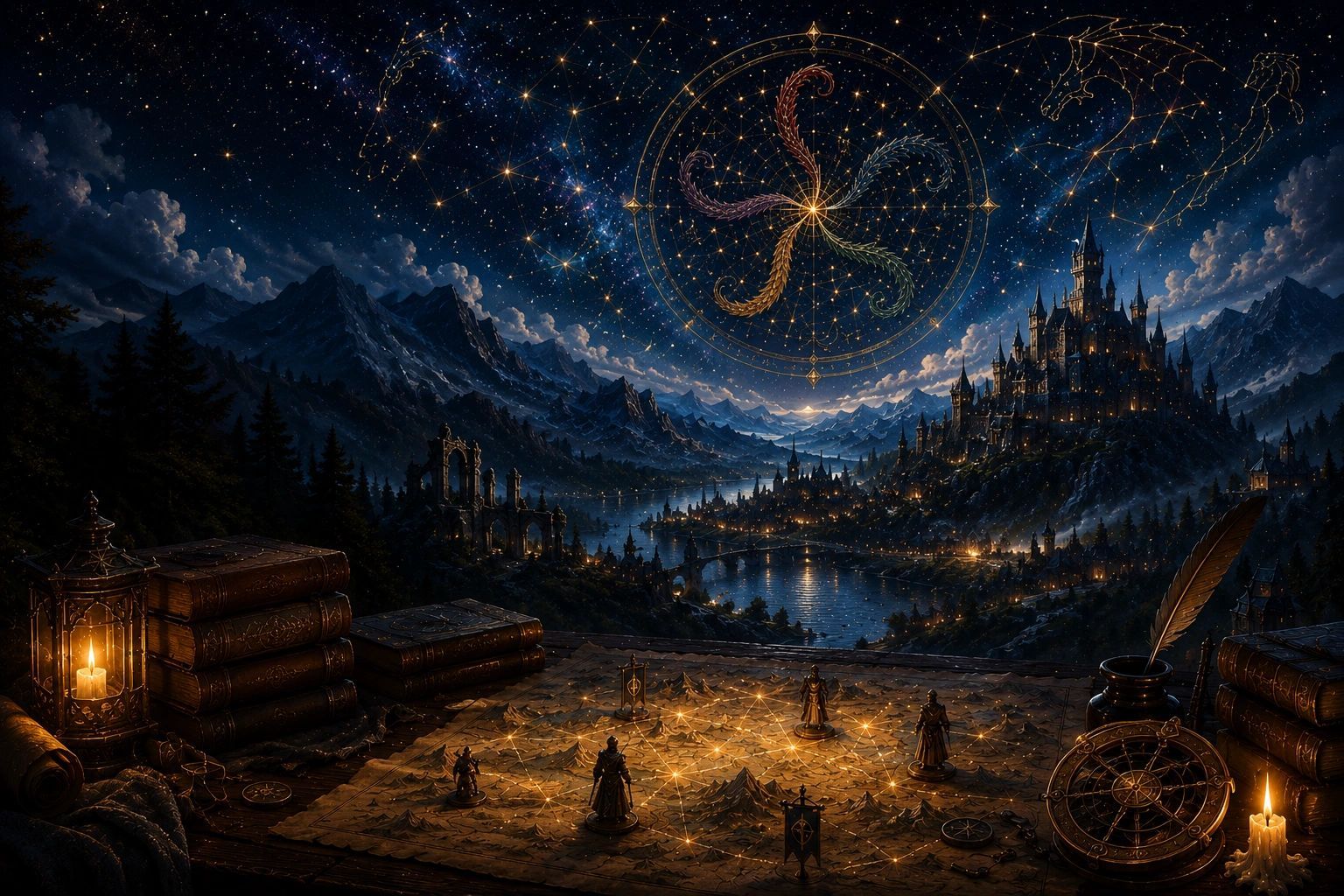
Create a world
Begin with a few inspirations. DragonsTales turns them into a protagonist, people, places, tensions, and an opening scene built for play.
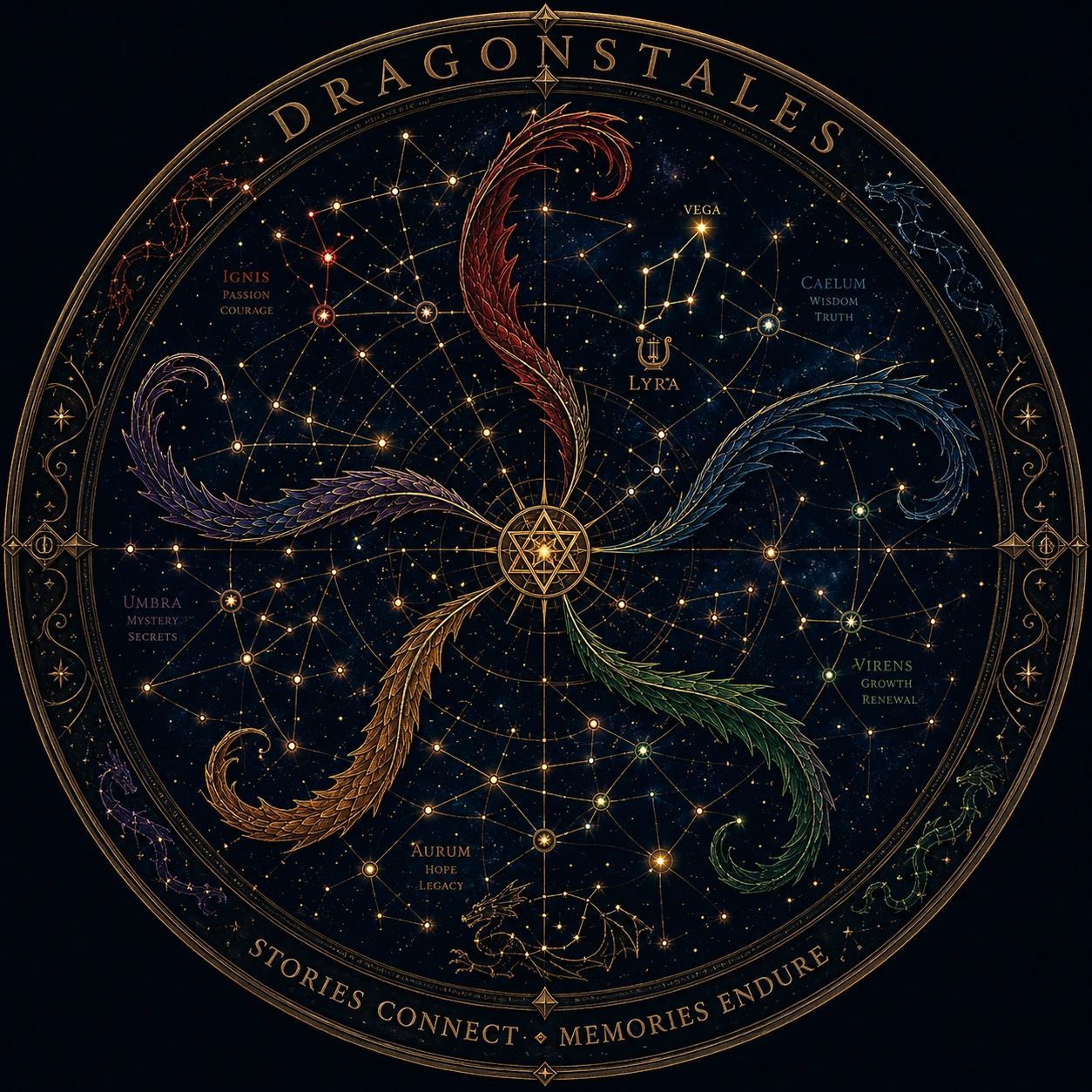
DragonsTales persistent narrative engine
Create a character and step into an original world you shape in your own words. Play a single conversation or let weeks pass—the engine carries forward what became true and what remains unresolved.
Play the world, not the interface
DragonsTales is not a menu of predetermined actions. Speak naturally, explain your intent, ask questions, take risks, make promises, or pursue an idea the world never explicitly offered you.
The narrator creates the moment. Beneath it, the engine preserves the people, places, events, relationships, and ongoing situations that give later moments meaning.
From inspiration to history
Create the premise, act freely, choose the pace, and discover what your decisions set in motion.
Begin with a few inspirations. DragonsTales turns them into a protagonist, people, places, tensions, and an opening scene built for play.
Speak, investigate, negotiate, travel, fight, make plans, or try something nobody anticipated. You express intent instead of choosing from a fixed menu.
Stay close for an important conversation, summarize an afternoon, spend weeks on a goal, or jump ahead until something matters.
The engine carries forward what happened, what changed, who was involved, and which promises, conflicts, and possibilities remain open.
Not sure what to type first? Read the player guide.
From an actual campaign
Unbelievable
Inspector Jack Farthing discovers a troublesome mirror that previews the competing stories people might tell about a choice. He uses it to consider one impossible, joyful experience with Aurix—a dragon whose reputation and safety obligations have already become part of their friendship. The world does not reduce the choice to yes or no.
Adapted from an actual campaign and lightly trimmed for length. The maneuver itself remains offstage.
First: test the consequence
Player
What will happen if I ask Aurix to do a barrel roll while we’re flying in to the dinner reception tonight?
The world answers
The strange mirror offers competing stories: “Hapless inspector showboats on dragon back” fights with “Inspector builds rapport with dragon; displays trust in professional skill.” One action could mean trust, recklessness, political theater—or all three.
Later: find a third path
Player
I know doing a barrel roll where other people can see it is a no-no, but is there a spot we could do one that nobody will see? Maybe above the cloud cover? So long as it’s safe and I won’t fall off.
Aurix
“Inspector Farthing, are you requesting an unscheduled, non-narrativized aerial maneuver purely for personal wonder?” He agrees—after establishing constraints: no witnesses, no unsecured inspector, and no accidental spectacle in the sky.
Afterward: let the moment endure
Player
I’m happy to just ride now, and let the warm glow of that barrel roll fade slowly.
Aurix
“As you wish, Inspector. We shall file the remainder of this transit under ‘quietly successful.’” The flight settles into silence, and the private adventure becomes part of the ease and trust between them.
What persisted
A warning became a negotiation. A dragon applied his own judgment. A private act of trust became shared history. That is the difference between remembering text and carrying a story forward.
What continuity changes
Creative narration lives on top of durable campaign history instead of treating every prompt as a fresh start.
Characters bring prior encounters and evolving relationships into the way they respond when you meet again.
Promises, mysteries, conflicts, commissions, and plans can remain unresolved, develop with time, and return to the foreground later.
When time advances, the world can account for extended activity, changing circumstances, and events beyond the immediate exchange.